
Even for a generator set with the same 200kW output, its operating conditions and maintenance requirements differ vastly depending on whether it is installed in the engine room of an ocean-going cargo ship or at a construction site. Factors such as salt spray concentration, vessel motion (rolling/pitching), exposure to seawater, and IMO regulations completely redefine the standards for the unit—inside and out. The distinctions between marine and land-based units lie in the following areas:
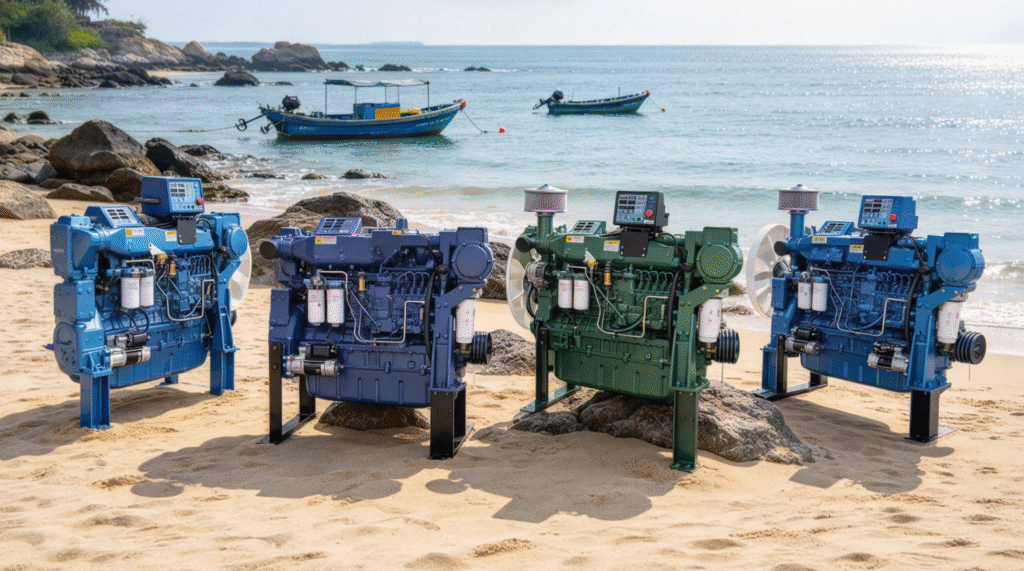
I. Structure and Composition
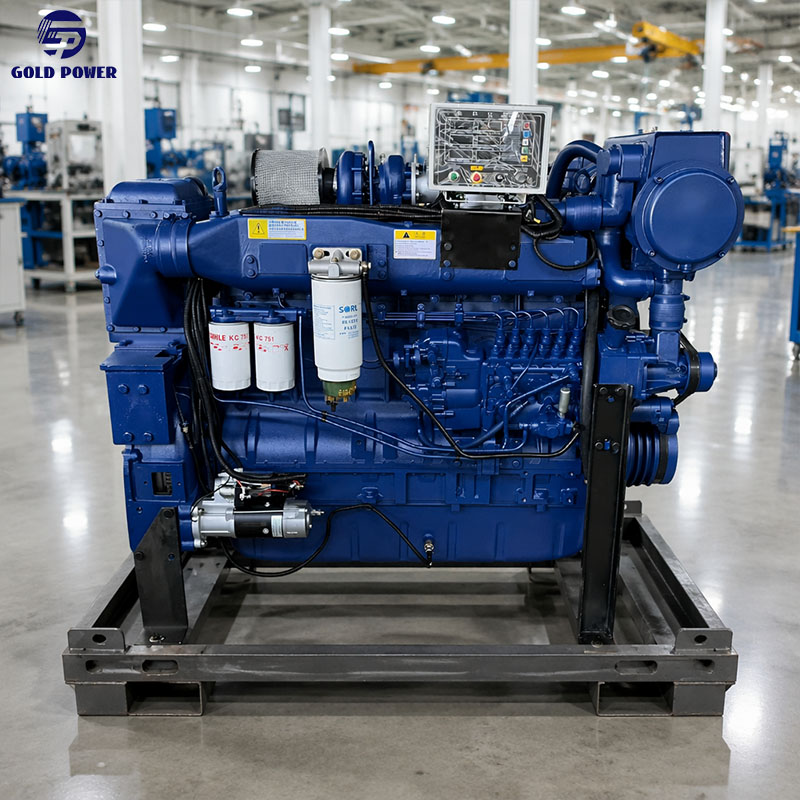
A typical marine unit consists of seven components: the diesel engine, generator, control system, cooling system, fuel system, exhaust system, and base frame. While visually similar to land-based units, every component has been “marinized” or redesigned for the marine environment: the cooling system incorporates a secondary seawater-to-freshwater circuit (using a seawater/freshwater heat exchanger); the exhaust system features a water-cooled jacket; and all exposed parts are coated with C5-M grade anti-corrosion materials.
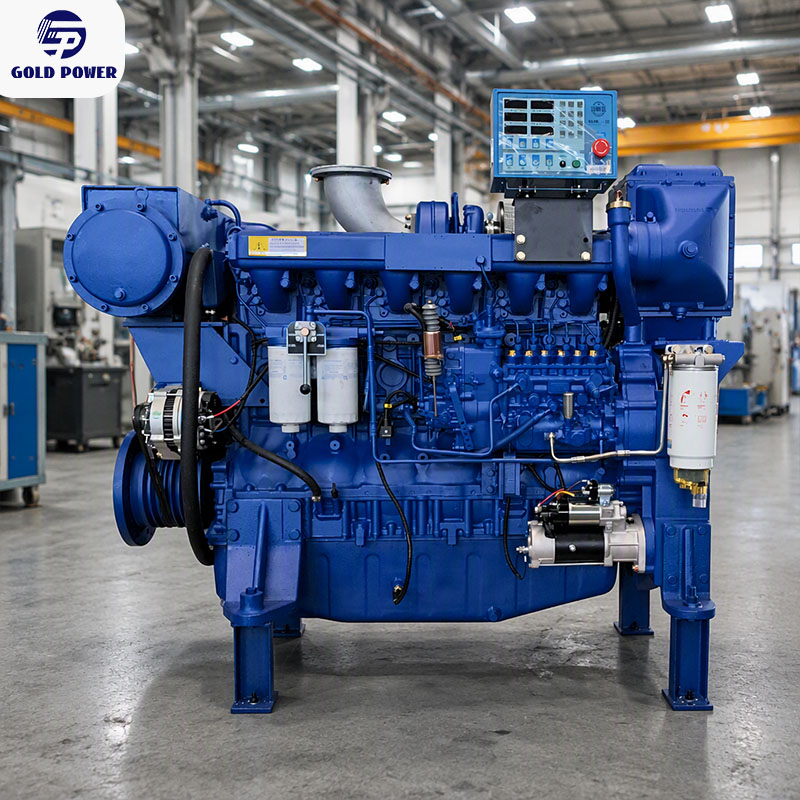
II. Core Differences from Land-Based Engines
1.Cooling: Land-based units typically use air cooling with radiators; marine units generally employ a closed-loop freshwater system cooled by seawater (“raw water”) to prevent salt spray from entering the engine block.
2.Inclined Operation: Marine units must meet classification society requirements for stable operation under static heeling of ±15° / +22.5° and dynamic rolling of ±45°.
3.Intake and Exhaust: Air intake and exhaust must be routed from outside the hull; the engine cannot draw in hot air from the engine room.
4.Emissions: Must comply with IMO MARPOL Annex VI Tier II / Tier III standards; land-based units follow EPA Tier 4 / EU Stage V standards—the two regulatory frameworks are not interchangeable.

5.Certification: Must obtain approval from the relevant classification society (e.g., CCS, LR, BV, DNV, ABS, RINA, NK, KR); land-based units typically require CE marking.
6.Fuel: Can use Marine Diesel Oil (MDO), while large main engines may use Heavy Fuel Oil (HFO); land-based units are restricted to automotive-grade diesel.
7.Corrosion Protection: Materials for fasteners, nameplates, and sensors are selected specifically to withstand salt spray test requirements.
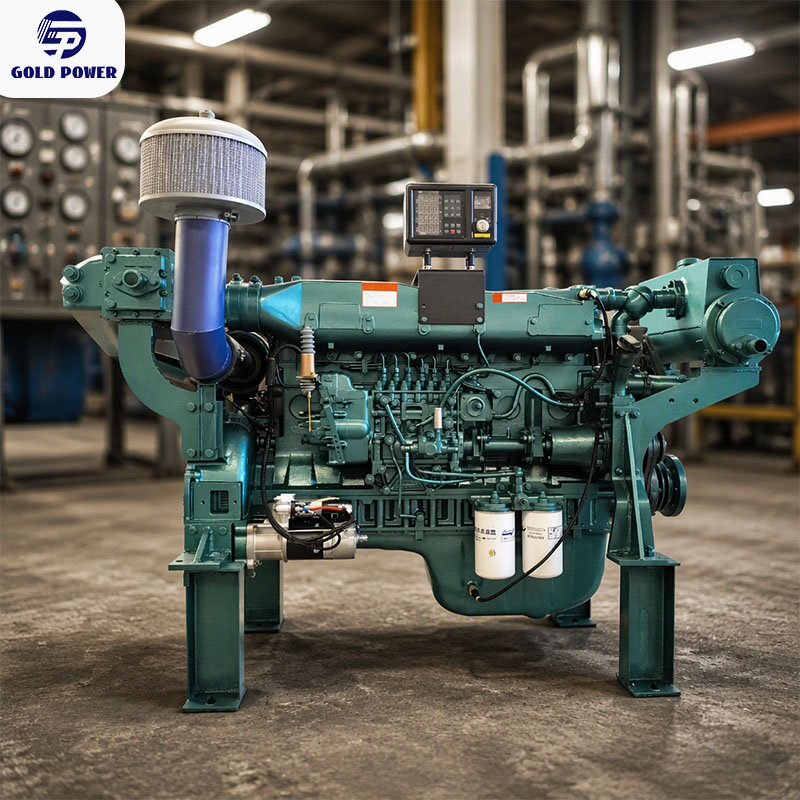
III. Four Key Factors for Selection
1. Classification Society Certification: Clarify the flag state, classification society, and power range before selecting a manufacturer; without the appropriate certificates, a marine surveyor will refuse approval.
2. IMO Tier Rating: Determine whether Tier II or Tier III applies based on the main engine’s rated speed and power. Tier III compliance is mandatory for newbuilds operating in Emission Control Areas (ECAs) such as the Baltic Sea, North Sea, and the West Coast of North America.
3. Cooling Method: Keel cooling is suitable for small engine rooms or waters with high turbidity; radiator cooling offers superior heat dissipation but takes up more space. Select based on the engine room layout rather than habit.
4. Inclined Operation Capability: Check the classification society’s standards for heeling/rolling angles and match them against the unit’s technical specifications; land-based specifications will invariably fail sea trials.
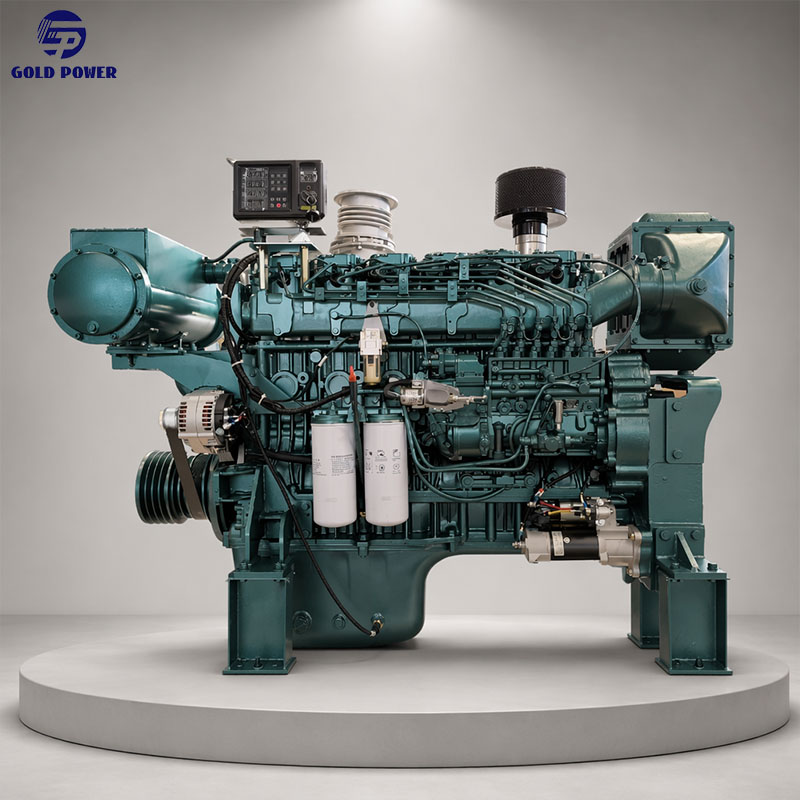
IV. Critical Onboard Maintenance Points
1.Seawater-side Heat Exchanger: Clean every 200–500 hours; otherwise, scaling and biofouling can trigger high-temperature alarms or even cause cylinder scoring/seizure.
2.Fuel-Water Separator: Drain water daily during operations; replace filter elements based on indicator lights rather than a calendar schedule.
3.Sacrificial Zinc Anodes: These provide cathodic protection for the seawater cooling chamber; replace every 3–6 months. Delaying replacement can lead to electrochemical corrosion eating through the cooling chamber wall.
4.Fluid Sampling & Analysis: Test lube oil viscosity, TBN, water content, and iron levels every 500 hours; condition-based oil changes are far more reliable than fixed-interval changes.
5.Leaks and Oily Wastewater: Address oil, air, and water leaks immediately and record them in the MARPOL Oil Record Book; direct discharge of oily bilge water into the sea is strictly prohibited.
6.Engine Room Log & Spares: Record every maintenance task in the Engine Log Book; keep a stock of filter elements, seals, belts, and temperature/pressure sensors on board.
Writing this, I can almost feel the sea breeze blowing in. Honestly, the thing we dread most in the marine engine business isn’t a client haggling over the price; it’s someone walking in with blueprints for a land-based generator set and asking, “Can I just install this on the ship?” Sure, you 「can」—but it’ll cost a fortune, and there’s a good chance it’ll break down during the sea trial.
There’s really only one way to save money: lay out the specifications alongside the engine room blueprints and cross-check every single detail. How big is the compartment? What’s the maximum angle of roll? Does it meet ECA requirements? How clear is the seawater? Once you’ve clarified those four points, the rest comes down to engineering craftsmanship and a bit of serendipity.
At the end of the day, marine engines aren’t just the product of calculations; they’re built on accumulated experience. Next time you’re unsure about a model, just send over the nameplate and the engine room blueprints—we’re professional generator set manufacturers, so let me take a look at them with you!