
Whether at oilfield drilling sites, well-servicing operations, central processing stations, or water injection facilities—or in scenarios like field exploration and emergency response—diesel generators are among the most common and reliable power sources.
When the mains power supply fails, diesel generators not only provide emergency power but are also critical for maintaining production continuity at well sites and ensuring the safety of both equipment and personnel. In remote oilfields, many well sites rely entirely on diesel generators for independent power.
While a diesel generator may appear to be simply an engine coupled with an alternator, it is actually a complex system integrating mechanical, fuel, electrical, control, cooling, lubrication, and exhaust subsystems. A malfunction in any one of these systems can lead to startup failures, insufficient power output, frequency fluctuations, or even total system shutdown.
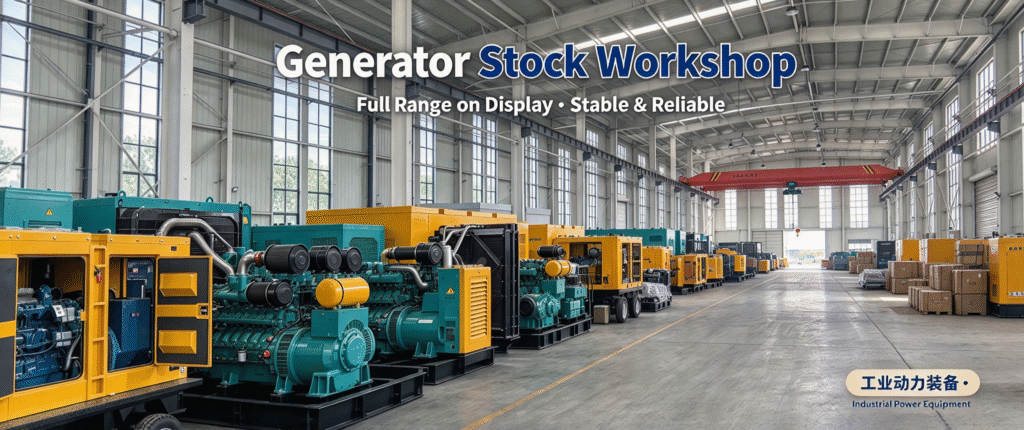
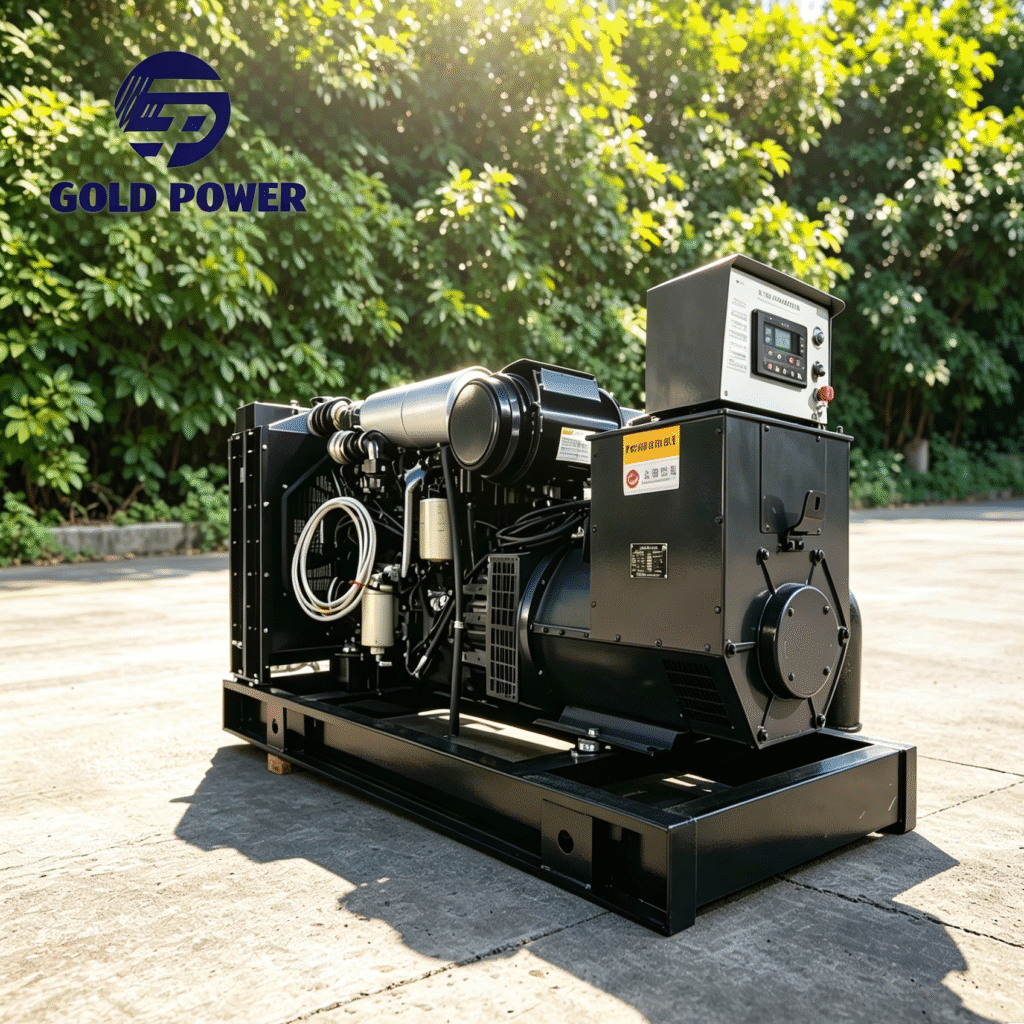
(I) Overall Composition of a Diesel Generator
1. Diesel generators are primarily composed of six major systems:
① Power System (Diesel Engine)
Key Components :Cylinder block, cylinder head, piston, connecting rod, crankshaft, flywheel.
Function: Converts thermal energy from diesel combustion into mechanical energy.
② Power Generation System (Alternator)
Key Components:Stator, rotor, excitation system, AVR (Automatic Voltage Regulator).
Function: Converts mechanical energy output from the engine into electrical energy.
③ Fuel System
Components:Fuel tank, fuel transfer pump, diesel filter, high-pressure fuel pump, common rail (or fuel injection pump), fuel injector.
Function: Supplies clean, high-pressure diesel fuel continuously to the engine.
④ Lubrication System
Components:Oil pump, oil filter, oil cooler, oil sump (oil pan).
Function: Reduces friction, dissipates heat, and prevents wear.
⑤ Cooling System
Components:Water pump, radiator, thermostat, cooling fan.
Function: Maintains the engine at its optimal operating temperature.
⑥ Control System
Components:Control panel, ECU (Electronic Control Unit), sensors, ATS (Automatic Transfer Switch) cabinet (backup power system).
Function: Performs starting, stopping, protection, monitoring, and alarming.
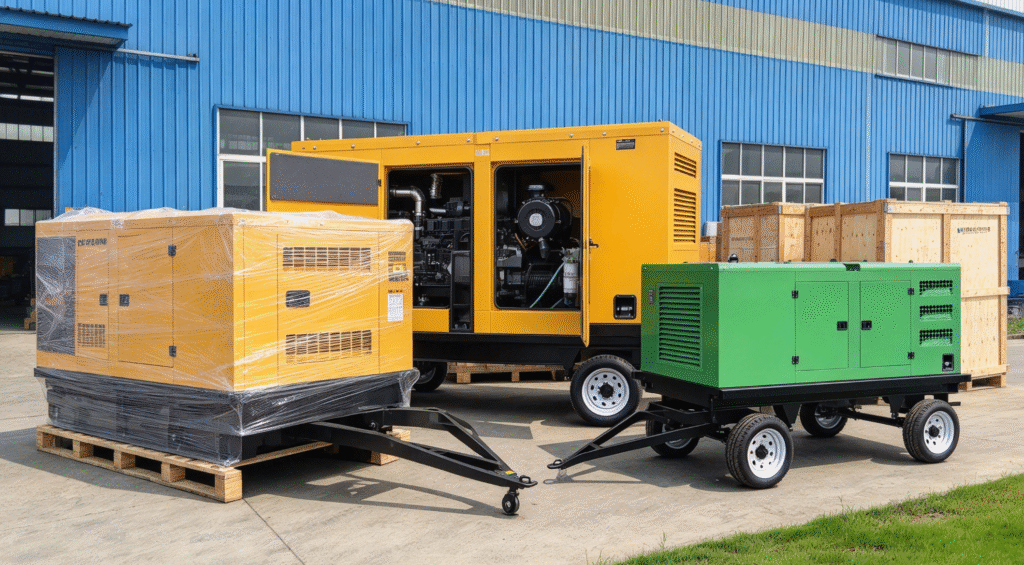
II. Functions of Major Components
| Component | Function | Susceptibility to Wear |
| Piston | Compression, power stroke | ★★★★☆ |
| Crankshaft | Power output | ★★★☆☆ |
| Fuel injector | Precise fuel injection | ★★★★★ |
| High-pressure fuel pump | Builds fuel pressure | ★★★★☆ |
| Generator | Electricity generation | ★★★☆☆ |
| AVR | Voltage stabilization | ★★★★☆ |
| Radiator | Cooling | ★★★☆☆ |
| Starter motor | Starts the engine | ★★★★☆ |
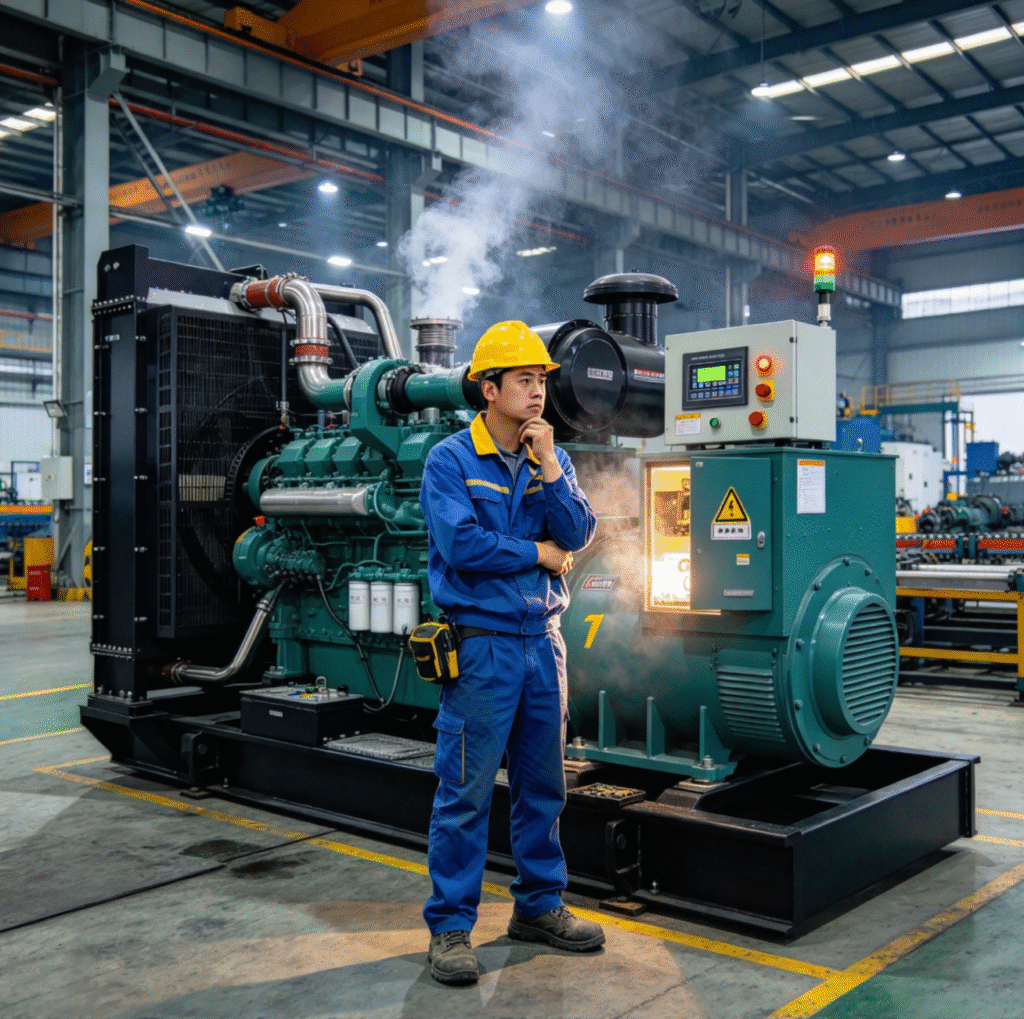
I. Diesel Engine Four-Stroke Operating Principle: Diesel engines utilize compression-ignition combustion; one operating cycle consists of four strokes:
① Intake stroke: Intake valve opens, piston moves downward, and air enters the cylinder.
② Compression stroke: Intake and exhaust valves close, piston moves upward, and air is compressed to high temperature and pressure.
③ Power stroke: Fuel injector sprays diesel into the high-temperature air; the diesel auto-ignites, driving the piston downward and outputting power.
④ Exhaust stroke: Exhaust valve opens, piston moves upward, and exhaust gas is expelled, preparing for the next cycle.
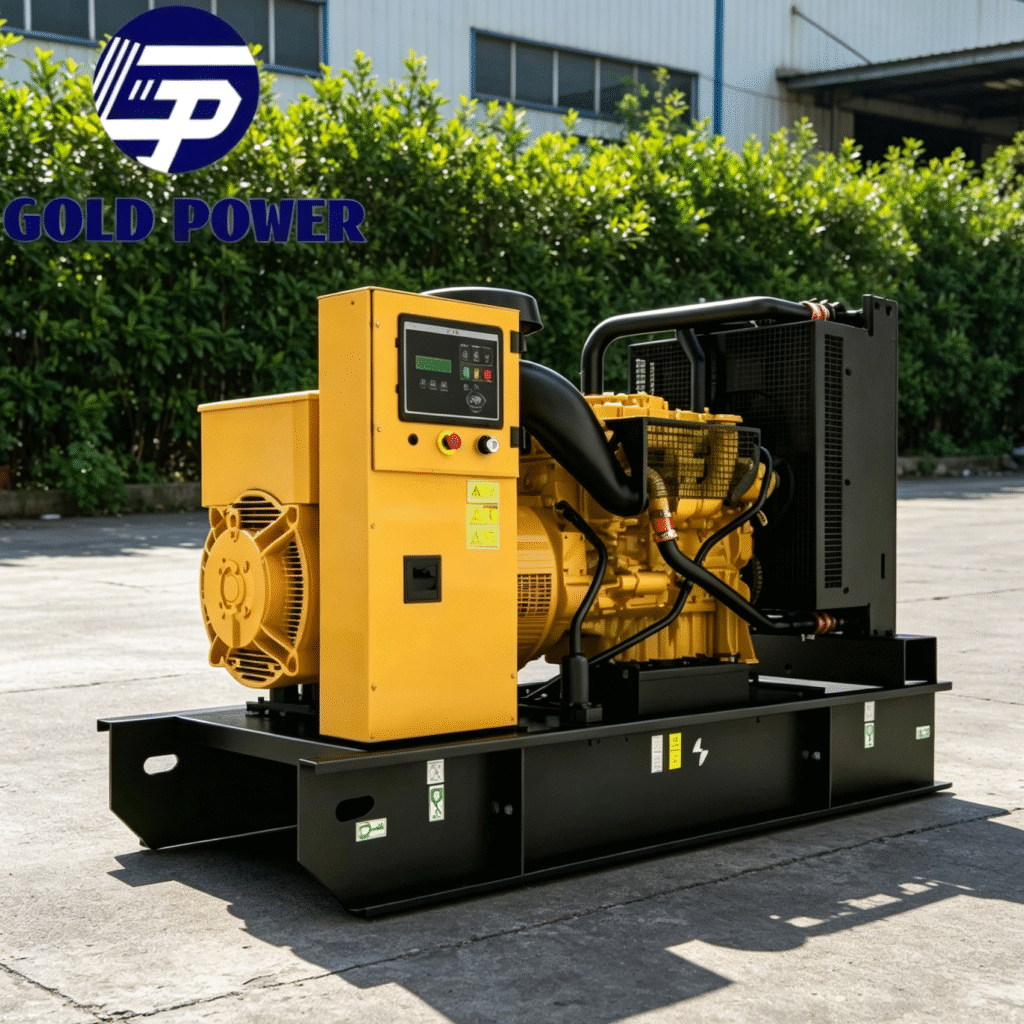
II. Power Generation Principle:
The engine drives the generator rotor to rotate. The rotor creates a rotating magnetic field. Stator windings cut across magnetic field lines. Based on the principle of electromagnetic induction, alternating current (AC) is output.
III. How are voltage and frequency stabilized?
Stable output relies primarily on:
1.Engine speed control system: Controls rotational speed to ensure frequency stability (50 Hz corresponds to approx. 1500 rpm for a 4-pole generator).
2.AVR (Automatic Voltage Regulator): Adjusts excitation current to stabilize output voltage.
IV. Characteristics and Advantages of Diesel Generators:
Quick starting, wide power range, independent power supply, high reliability, and adaptability to harsh environments.
Disadvantages: High noise levels, higher emissions, and fuel costs subject to market fluctuations.
I. Failure to Start Symptom: Starter motor turns, but the engine fails to fire.
Causes: Air in the fuel system, insufficient diesel, fuel injector malfunction, insufficient cranking speed, low battery voltage.
Remedy: Check fuel levels, bleed air from the system, and inspect the starting and fuel injection systems.
II. Engine Stalls Immediately After Starting
Causes: Interrupted fuel supply, solenoid shut-off valve malfunction, ECU-triggered protective shutdown.
Remedy: Systematically check fuel, electronic control, and protection signals.
III. Insufficient Power
Causes: Clogged air filter, clogged diesel filter, poor fuel injector atomization, turbocharger malfunction.
Remedy: Restore performance of the air intake and fuel supply systems.
IV. Low Oil Pressure
Causes: Insufficient oil, worn oil pump, clogged filter, worn bearing shells.
Remedy: Shut down immediately for inspection to prevent cylinder scoring or crankshaft seizure.
V. Excessive Water Temperature
Causes: Insufficient coolant, clogged radiator, water pump malfunction, thermostat failure.
Remedy: Top up coolant, clean the radiator, and inspect the circulation system.
VI. Abnormal Voltage
Causes: AVR malfunction, excitation winding issues, speed fluctuations.
Remedy: Inspect the excitation system and speed regulation system.
Ⅶ.Frequency Fluctuation
Causes: Governor maladjustment, sudden load changes, unstable fuel supply.
Action: Adjust the governor; properly control load variations.
1. Daily Inspection (per shift)
Key Checkpoints: Engine oil level, coolant level, diesel fuel level, battery voltage, output voltage, frequency, water temperature, oil pressure; check for oil, water, or air leaks, vibration, abnormal noises, and exhaust smoke color.
Recommended “Look, Listen, Smell, Touch, Measure” 5-step inspection method:
Look: Fluid levels, leaks, instrument readings;
Listen: Abnormal knocking or bearing noises from the engine or generator;
Smell: Burning odors, fuel odors, or unusual coolant odors;
Touch: Temperature rise in bearing housings, radiators, and piping (exercise caution to avoid burns);
Measure: Record data such as voltage, frequency, current, insulation resistance, and battery voltage.
2. Lubrication Management
| Component | Lubrication Task | Interval (Reference) |
| Engine | Oil change | 250–500 hours (per manufacturer specifications) |
| Oil filter | Replacement Coincide | with oil change |
| Air filter | Clean/Replace | Depends on operating environment |
| Diesel filter | Replacement | 250–500 hours |
| Fan bearings | Check lubrication | Regularly |
⚠️Actual maintenance intervals should adhere to the equipmentmanufacturer’s manual.
Diesel generators are vital power equipment in production operations; their stable performance is directly linked to production continuity and safety.
Equipment management should not be limited to post-failure repairs; instead, a full lifecycle management system should be established, covering routine inspections, lubrication, maintenance, condition monitoring, spare parts management, and reliability analysis.
Only through standardized maintenance, scientific diagnostics, and data-driven management can organizations effectively reduce failure rates, extend equipment lifespan, and enhance power supply reliability, thereby ensuring a continuous, stable, and safe power supply for oilfield operations.
For equipment managers, the ultimate goal is not merely to “fix a generator,” but to maintain the equipment in optimal operating condition, achieving superior economic returns and minimizing total lifecycle costs.