
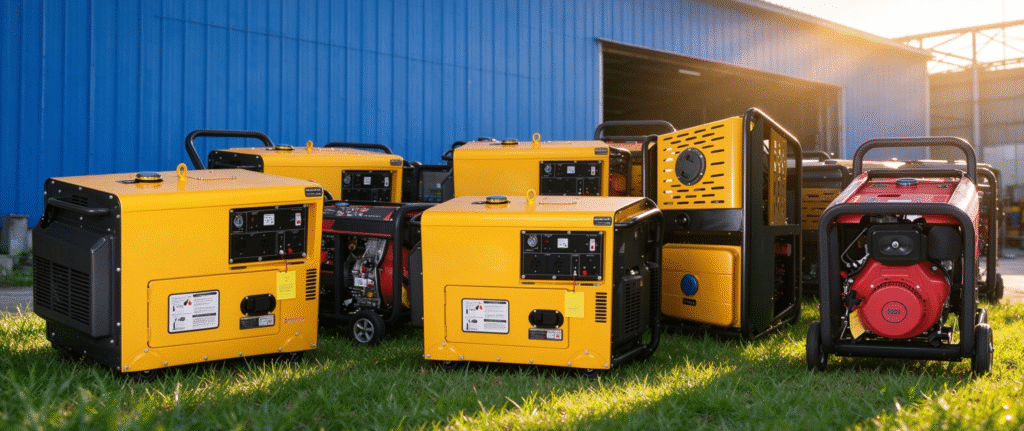
When encountering generator sets for the first time, many clients ask three key questions: What exactly is inside this machine? Which parts are prone to failure? And what should I keep in mind during daily operation?
While a generator set might look like a simple, solid block of metal, it is actually a sophisticated power-generation system composed of hundreds of components working in tandem. In this guide, we will break it down completely—providing you with the knowledge you need for everything from procurement and selection to daily operation and maintenance.
I. What’s Inside a Generator Set?
A standard diesel generator set is essentially a combination of a “power system, power-generation system, control system, and auxiliary support system.” All these components are integrated onto a common base frame, forming a self-contained, independent power-generation unit.
1. The Powerheart: The Diesel Engine
This is the engine room of the entire unit. Its function is to convert the chemical energy of diesel fuel into rotational mechanical energy, which then drives the generator to produce electricity. Most mainstream generator sets utilize four-stroke, water-cooled diesel engines; high-output models typically feature an inline 6-cylinder or V-cylinder configuration.
Internally, the engine consists of two primary mechanisms and four major systems:
- Crank-Connecting Rod Mechanism: Comprising pistons, connecting rods, a crankshaft, and a flywheel, this is the core moving assembly responsible for power output. The combustion of diesel fuel drives the pistons, which in turn convert this motion into the rotational power of the crankshaft.
- Valve Train (Timing Mechanism): Consisting of intake valves, exhaust valves, a camshaft, and rocker arms, this system precisely controls the timing of intake and exhaust valve opening and closing based on the engine’s operating conditions.
- Fuel System: Includes the diesel tank, fuel transfer pump, fuel filter, high-pressure fuel pump, and injectors. It pressurizes the diesel fuel and injects it precisely into the cylinders for combustion.
- Lubrication System: Comprising an oil pump, oil filter, oil passages, and an oil pan, this system provides lubrication, cooling, and cleaning for all moving parts.
- Cooling System: Includes a water pump, radiator, fan, thermostat, and cooling passages. It dissipates excess heat generated during combustion, ensuring the engine maintains its optimal operating temperature.
- Intake and Exhaust System: Includes the air filter, turbocharger, exhaust manifold, and silencer; responsible for filtering and pressurizing intake air, as well as reducing noise from exhaust gases.
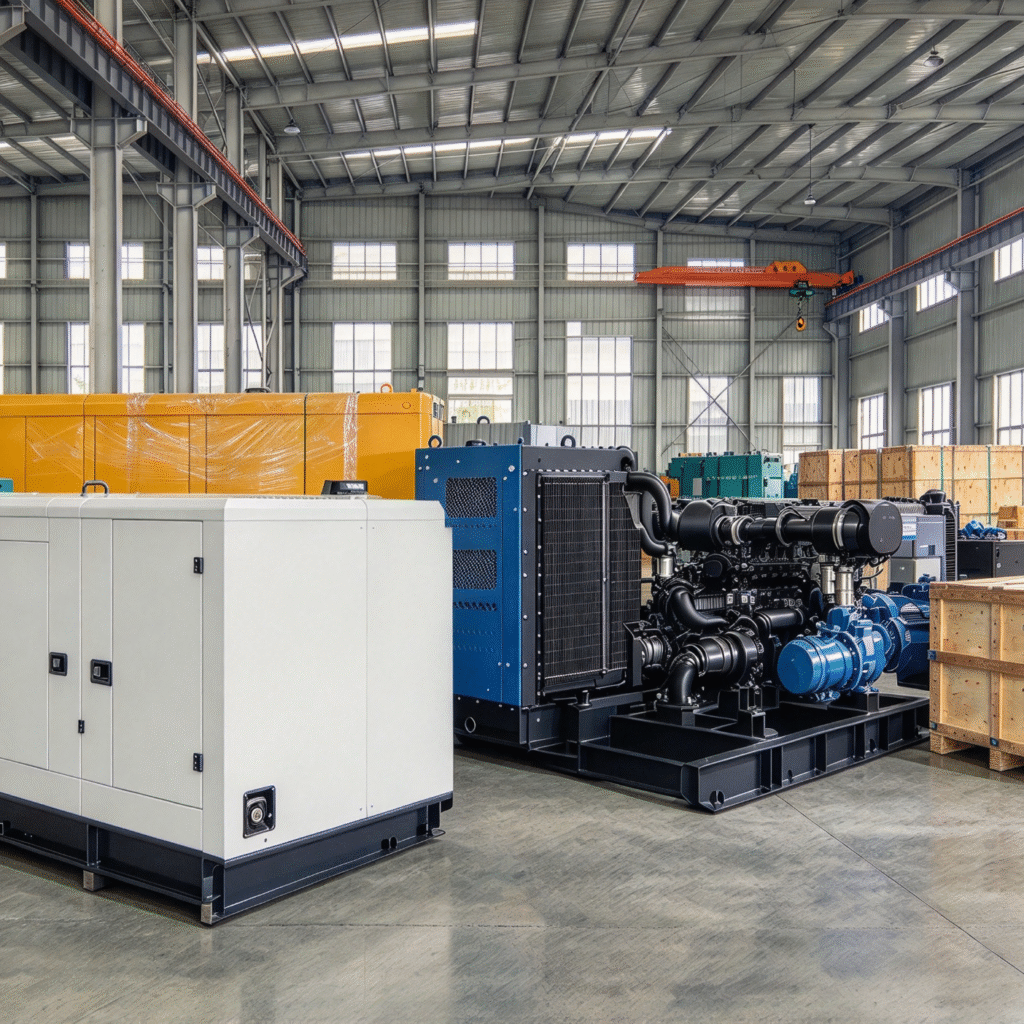
2. Power Generation Core: Synchronous Generator (commonly referred to as the “alternator end”)
Directly coupled to the diesel engine’s crankshaft, the generator is driven at high speed to convert mechanical energy into three-phase alternating current (AC) for practical use. Most industrial generator sets utilize brushless synchronous AC generators, which eliminate wear associated with carbon brushes and require less maintenance.
The core consists of two main parts:
Stator: A stationary iron core with three-phase windings, where the AC output is generated via electromagnetic induction.
Rotor: Rotating magnetic poles and excitation windings that create a rotating magnetic field when energized.
Excitation and Voltage Regulation System: Comprising an exciter, a rotating rectifier, and an Automatic Voltage Regulator (AVR), this system ensures a stable output voltage, even when the load fluctuates.
3. Command Center: Control System
Acting as the “nervous system” of the generator set, the control system manages start/stop operations, monitors running parameters, provides fault protection, and enables automated functions (such as automatic startup and power switching in the event of a mains power failure).
Key components include:
Controller Module: The human-machine interface that displays parameters—such as voltage, current, frequency, coolant temperature, and oil pressure—and serves as the control point for starting and stopping the unit.
Sensors: Devices such as coolant temperature sensors, oil pressure sensors, speed sensors, and voltage/current transformers that collect real-time operational data.
Protection and Actuation Components: Air circuit breakers, relays, and solenoid valves that trigger automatic shutdowns to protect the unit in the event of faults like high temperatures, low oil pressure, overcurrent, or short circuits.
- 4. Foundational Support Components
Beyond the three primary core systems, several essential auxiliary components are required:
Common Base: Constructed from welded high-strength structural steel, this base supports all components and incorporates vibration-damping pads to neutralize operational vibrations.
Starting System: Includes the battery, starter motor, and charging system (alternator). These provide the power required to start the engine, with the charging system replenishing the battery while the engine is running.
Vibration and Noise Reduction Components: Engine mounting pads and exhaust silencers, which serve to dampen operational vibrations and reduce noise.
Fuel Tank: Can be integrated into the base frame or installed as a separate, external unit; used for storing diesel fuel.
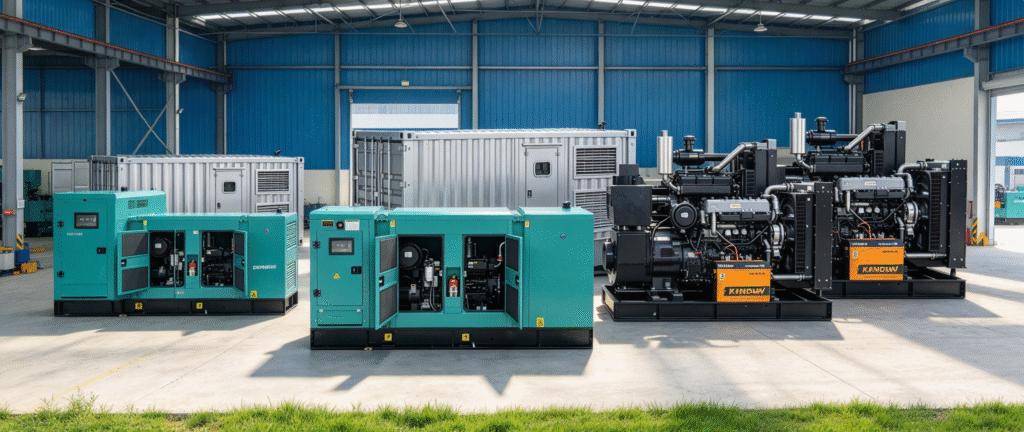
II. Which components are most prone to failure?
The vast majority of generator set malfunctions occur in consumables and high-wear parts. Core components—such as the cylinder block and crankshaft—can last for tens of thousands of hours, provided they receive proper maintenance. Components prone to issues generally fall into three categories:
- Consumables and Wear Parts: Require periodic replacement; failure to replace them will inevitably lead to problems.
These items are consumables with defined replacement intervals and form the core of routine maintenance.
Air Filter: The component most susceptible to contamination, especially in dusty environments like construction sites or mines. A clogged filter restricts air intake, leading to a loss of power, increased fuel consumption, and significant carbon buildup. It should generally be inspected and cleaned every 200 hours and replaced every 400 hours.
Oil Filter: Removes metal debris and impurities from the engine oil. It must be replaced whenever the engine oil is changed; otherwise, the oil change is effectively rendered useless.
Diesel Filter + Water-Fuel Separator: Filters out impurities and moisture from the diesel fuel. Given the inconsistent quality of diesel fuel, this is a frequent source of malfunctions. Clogging can result in insufficient fuel supply, engine stalling, or damage to the fuel injectors. Replacement is recommended every 200–250 hours.
Engine Oil and Coolant: Over time, engine oil oxidizes, thins out, and loses its lubricating properties. Coolant can degrade and form scale, leading to high-temperature corrosion. These should typically be replaced every 250 hours or every six months.
Starting Battery: Standard lead-acid batteries have a lifespan of 2–3 years. Long periods of inactivity or exposure to low temperatures can accelerate power depletion; this is the most common reason for an engine failing to start.
- High-Failure Components: Critical parts most prone to breakdown during operation
- Fuel Injectors: These require extremely clean diesel fuel; impurities or moisture can easily cause wear on the needle valve and result in poor atomization. Symptoms include black exhaust smoke, loss of power, unstable idling, and a sharp increase in fuel consumption. In severe cases, the injector may seize completely, preventing any fuel injection.
- Water Pump: Central to the engine cooling system, common failures include water seal degradation (leading to leaks) and bearing noise or seizure. A pump failure can rapidly cause the engine to overheat and suffer cylinder scoring (seizing).
- Starter Motor and Alternator: Frequent use of the starter motor can wear down carbon brushes or cause coil ablation, manifesting as weak cranking or gear-grinding noises. An alternator failure leads to a gradual depletion of the battery, eventually rendering the unit unable to start.
- AVR (Automatic Voltage Regulator): The core component for voltage stabilization in a generator. Exposure to moisture, overloading, or aging can cause voltage instability—resulting in output that is too high or too low—and may even burn out the excitation windings.
- Various Sensors: Sensors for water temperature and oil pressure operate in high-temperature, high-pressure environments. They are prone to failure, which can result in false alarms or, conversely, a failure to trigger an alarm when a genuine issue arises—potentially leading to serious consequences.
- Components Prone to Aging: Parts that inevitably fail over time
These types of failures are strongly correlated with the duration of use. For generator sets that are 3–5 years old or older, pay special attention to the following:
Rubber Hoses (Fuel/Water) and Gaskets: These can harden, crack, and age, leading to oil or water leaks.
Drive Belts: Fan belts and alternator belts may develop cracks, lose tension, or slip, causing high engine temperatures or a failure to charge the battery.
Exhaust Silencer (Muffler): Subjected to long-term corrosion from exhaust gases, the silencer may develop holes, leading to a significant increase in noise levels.
Generator Insulation: Exposure to moisture or dust can reduce insulation resistance, which, in severe cases, can cause a short circuit in the windings.
III. Key Considerations for Daily Use and Maintenance
Generator sets follow the principle that “maintenance is seven parts, repair is three parts.” Proper, standardized maintenance can double the service life of a unit and significantly extend the interval between major overhauls. 1. Three Mandatory Checks Before Startup
Fluid Levels: Check the oil dipstick to ensure the oil level is within the specified range; verify the coolant level in the radiator/tank and top up with the correct type of coolant if necessary; ensure there is sufficient fuel.
Electrical System: Check that battery connections are secure and free of oxidation; visually inspect wiring for any damage or exposed conductors.
External Condition: Inspect the unit for signs of oil or coolant leaks; check the tension of drive belts; examine the air filter service indicator to ensure it is not clogged.
- Key Monitoring Points During Operation
Core Parameters: Maintain water temperature between 75–95°C and oil pressure between 2–6 bar; ensure voltage and frequency remain stable without significant fluctuations.
Sensory Inspection: Listen for any abnormal knocking or friction sounds; smell for signs of burning (acrid odors) or raw diesel; observe the exhaust smoke—normal exhaust is light gray, while persistent black, blue, or white smoke indicates an issue.
Load Management: Avoid prolonged operation at low loads (below 30%), as this can lead to carbon buildup and oil consumption; likewise, avoid operating the unit above its rated power capacity for extended periods. 3. Standard Maintenance Schedule Reference
Four Harmful Habits That Damage Generator Sets
Prolonged low-load idling: The primary cause of carbon buildup, “blow-by” (crankcase pressure), and excessive oil consumption. For standby units, it is recommended to run the generator at a load of at least 50% for 30 minutes every month.
Using low-quality diesel or unbranded/inferior engine oil: A “penny-wise, pound-foolish” approach; poor-quality fuel or oil can ruin fuel injectors and cylinder liners in as little as six months.
Applying a heavy load immediately after a cold start: Before the engine oil has fully circulated to provide lubrication, this can easily lead to cylinder scoring or bearing wear. Always allow the engine to idle and warm up for 3–5 minutes before applying a load.
Abruptly shutting down the engine while under a heavy load: Rapid cooling of high-temperature components can cause cylinder head deformation or damage to the water pump seal. Always remove the load and allow the engine to idle for 2–3 minutes to cool down before shutting it off.
Precautions for Long-Term Storage
Drain the diesel fuel tank or add a fuel stabilizer to prevent the formation of gummy deposits that could clog the fuel system.
Drain old engine oil and coolant to prevent internal corrosion of the engine block.
Remove the battery and store it in a cool, dry place; recharge it every 1–2 months. Ensure the unit is properly covered to protect it from dust and moisture. Manually rotate the crankshaft 1–2 full turns each month to prevent the crankshaft bearings from becoming deformed due to prolonged, static pressure.
In summary, a generator set is a mature and reliable power system with core components designed for a long service life; the vast majority of malfunctions stem from inadequate maintenance or improper operation. By selecting a dependable model and ensuring regular, proper maintenance, the unit can easily provide over a decade of reliable service.