
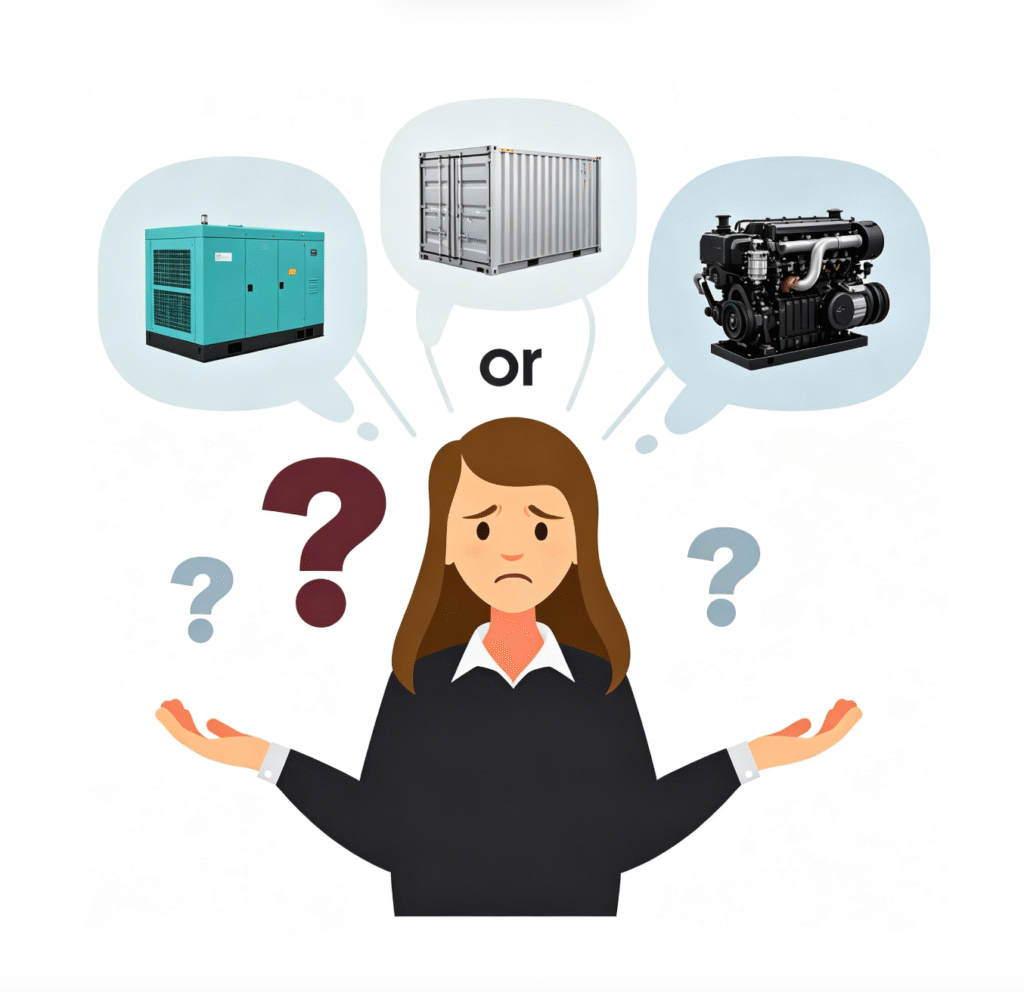
Have you ever encountered this situation? Two identical 100kVA Cummins diesel generator sets—one quoted at 80,000 and the other at 110,000. Why the difference? It often comes down not to the engine itself, but to the outer housing. Generators generally fall into three categories: soundproof enclosure, open-frame, and containerized. Let me explain the differences below.
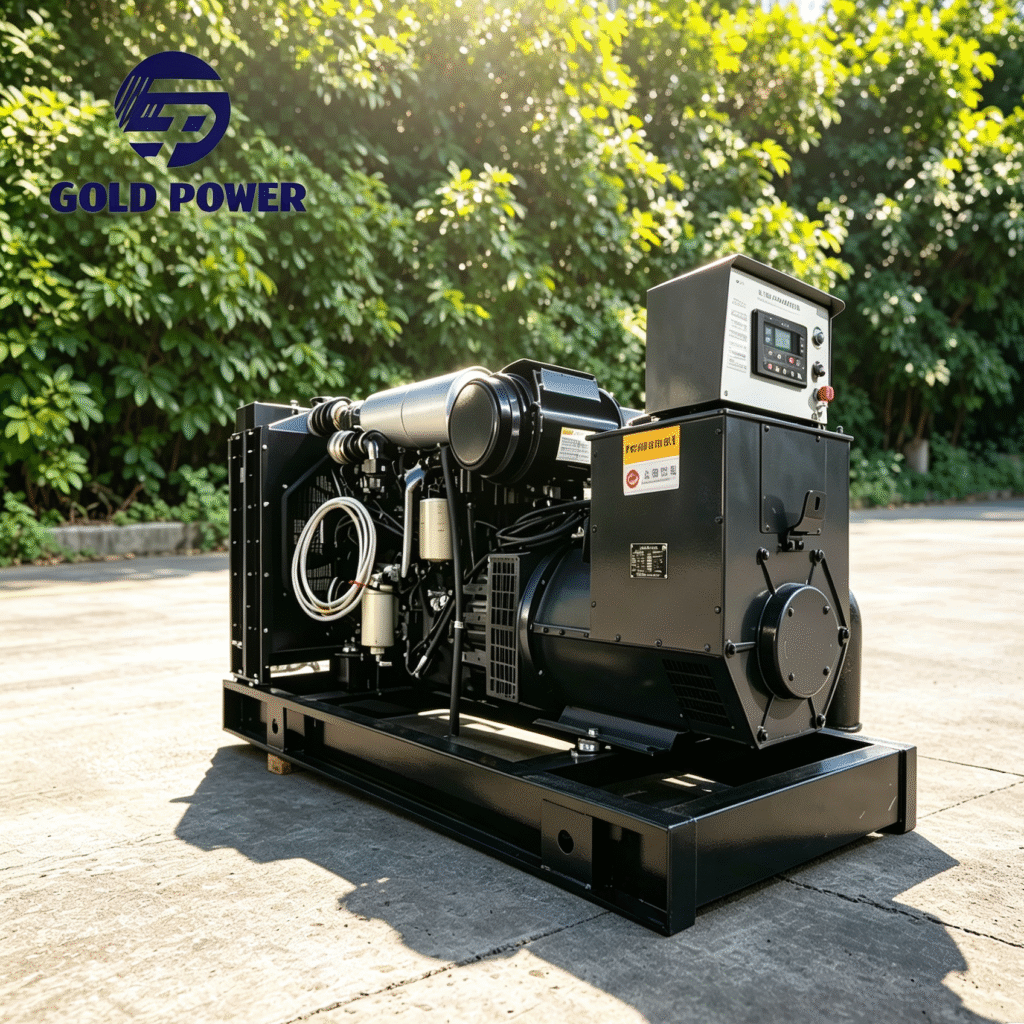
I. Open-frame
The engine, alternator, and control panel are all mounted openly on a steel base frame.
Advantages: Best heat dissipation; suitable for high-temperature, high-humidity, and high-altitude environments; easy maintenance with all-around access; lightweight, compact footprint, and lowest price; ample room for modifications such as adding paralleling systems, remote monitoring, and waste heat recovery.
Disadvantages: High noise levels (typically 95–110dB(A) at 7m), restricting use to sound-insulated dedicated plant rooms or remote sites; not rainproof (requires a shelter if used outdoors); exposed live parts necessitate strict safety precautions; prone to damage from bumps or impacts during transport.
Suitable for: Factory power distribution rooms, mining areas, remote construction sites, backup power projects, and fixed installations with limited budgets.
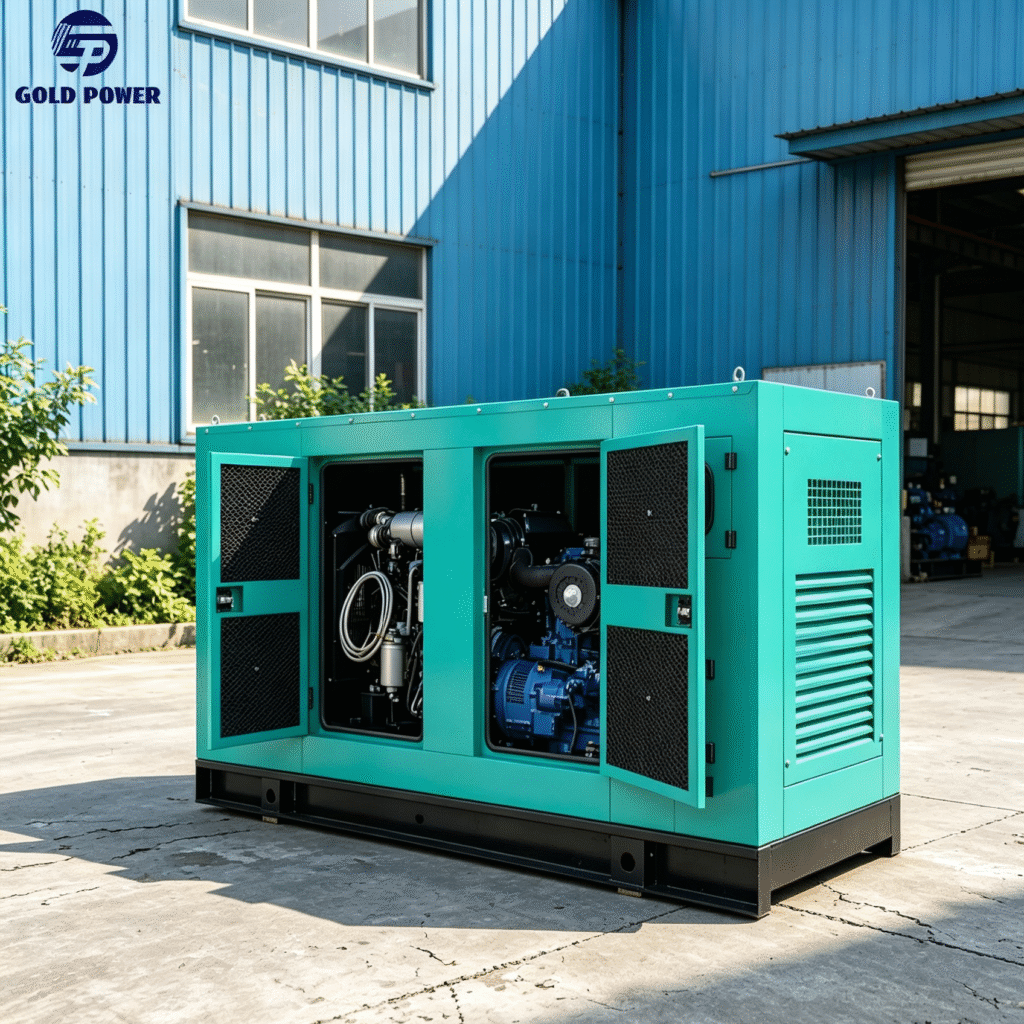
II. silent type (Soundproof style )
Essentially an open-frame unit fitted with a specially designed acoustic enclosure; uses sound-absorbing foam, silencers, and intake/exhaust ducts to suppress noise to 65–75dB(A) at 7m.
Advantages: Low noise levels meet environmental regulations for urban night construction, hospitals, hotels, and residential areas; protects against rain, dust, and small animals; neat appearance, ideal for exhibitions and rental applications; many models feature integrated control panels and fuel tanks for “plug-and-play” convenience.
Disadvantages:Poor heat‑dissipation causes high internal temperature, easy to trigger coolant temperature alarm under long‑time full‑load running; narrow maintenance space (major repair needs to remove whole enclosure); heavier & larger, harder for transport and placement; price 15‑30% higher than same‑spec open‑frame units.
Suitable for: Urban residential zones, commercial buildings, generator rental businesses, outdoor activities, telecom base stations, construction sites and projects with strict noise‑control requirements.
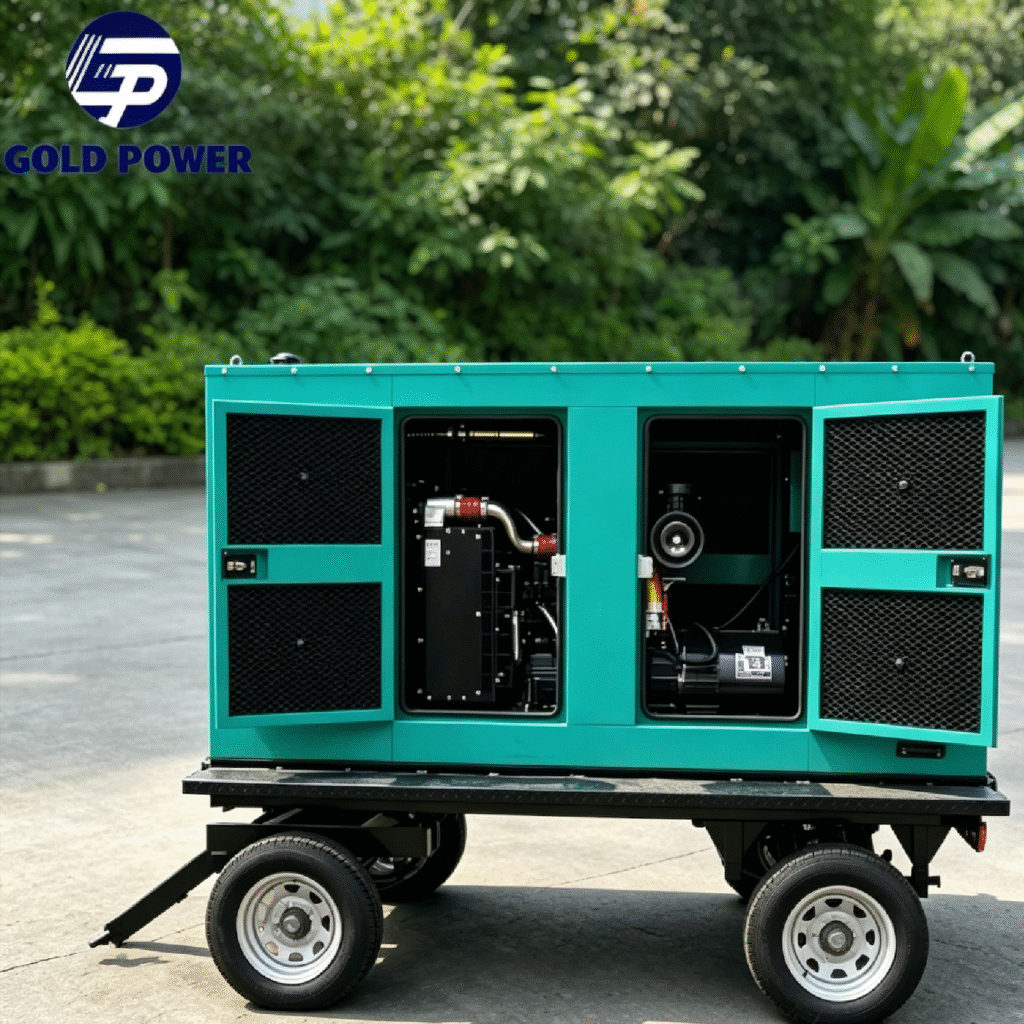
Also it can have wheels,Move gengerator set.
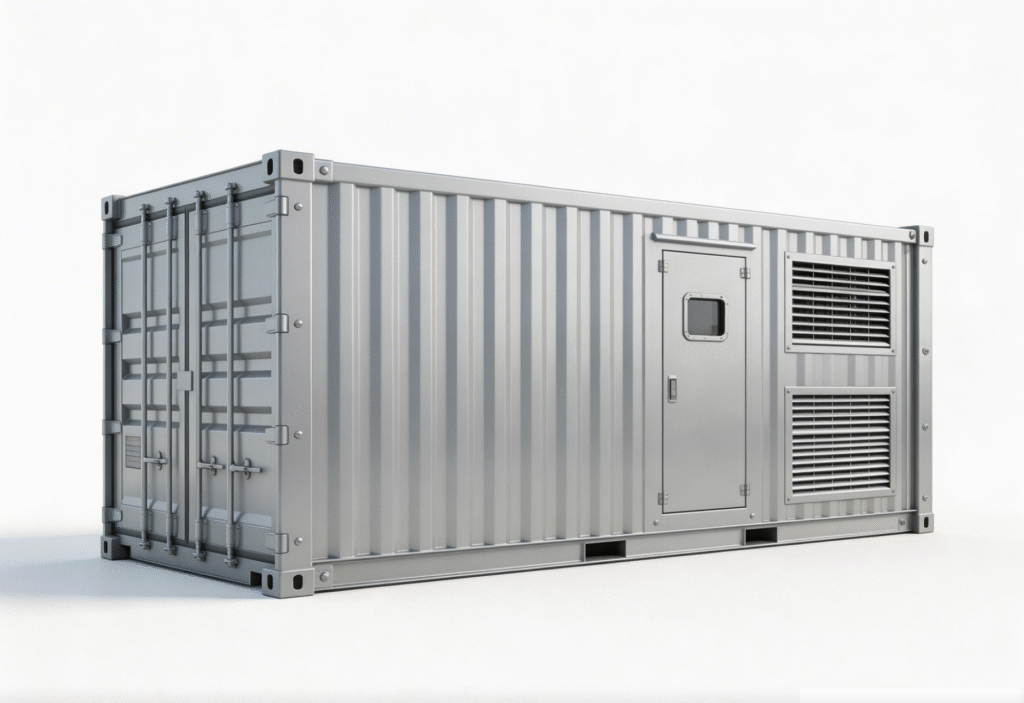
III. Containerized Type
Resembling a modular cabin, this type uses a standard 20-foot or 40-foot shipping container as the outer shell. It integrates the generator set, paralleling cabinet, fire suppression system, ventilation, and cable interfaces into a single unit, functioning as a mobile power station.
Advantages: High protection rating (theft-proof, rain-proof, and sand/wind-resistant), suitable for use in deserts, on islands, or at high altitudes; high capacity (1–3 MW per unit, with multiple units capable of forming a multi-megawatt power station); rapid deployment (ready to generate power once hoisted into place and connected); standard dimensions facilitate ocean shipping and customs clearance for overseas EPC projects.
Disadvantages: Highest cost (often several times that of open-frame models); requires a crane, concrete foundation, and cable trenches; substandard ventilation, heat dissipation, or fire safety designs pose significant risks; complex drawing reviews and certification processes lead to long lead times; not cost-effective for small-capacity projects.
Suitable for: Data centers, large-scale mines, oil fields, overseas power station projects, and high-capacity temporary power supply.
IV. Where does the money actually go?
1. With open-frame models, the cost is almost entirely in the machinery itself, with no extra expenses. If you buy a Weichai generator set, you pay only the price of the Weichai unit; if you buy a Perkins unit, you pay only the price of the Perkins unit.
2. The price difference for silent models pays for the thickness of the enclosure, the weight of the sound-insulating material, and the design of the silencer and cooling air ducts. Why is there a price difference when buying the same Weichai generator set? You are paying for noise reduction.
3. The cost of containerized units covers the structure, paralleling capabilities, fire suppression systems, and overall integration. This type offers superior noise reduction and is best suited for large-scale projects.
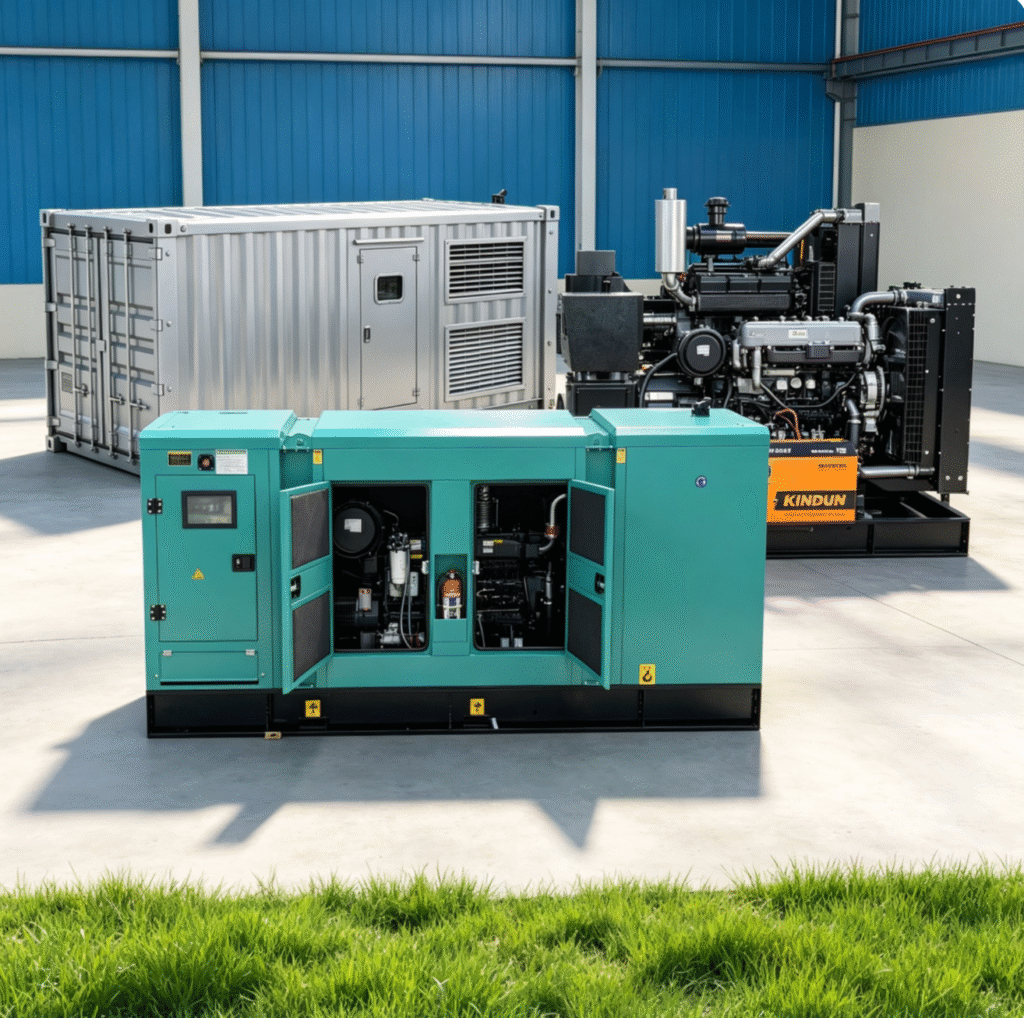
So, when asking “Why is it more expensive for the same 100 kVA rating?”, the real comparison should be: Did they actually implement an acoustic design, or did they simply add a sheet-metal cover?
Finally, here are three questions for procurement professionals:
How far will the required generator set be located from the nearest residential area or office during operation? How many hours will it run continuously each day, and will it be used for prime power or standby power? Is the delivery location remote? Is paralleling required? Clarify these three points, and the basic configuration is essentially determined. A suitable configuration always saves more money than an expensive one; what matters most is purchasing the solution that truly fits your needs.
We recommend a factory: Shandong Jiufeng Power Technology Co., Ltd.
It is our partner manufacturer with over 10 years of manufacturing experience.