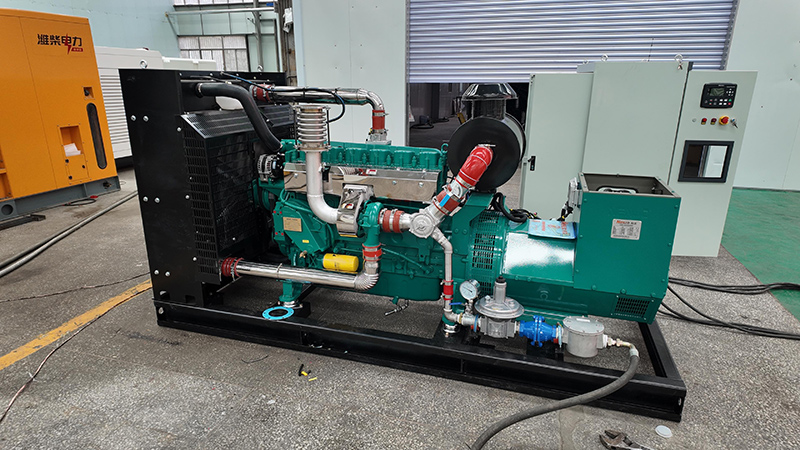
A diesel generator set (genset) is a reliable power source used in industrial, commercial, and residential sectors. Understanding its full lifecycle—from its physical structure to operational procedures and fault management—is essential for ensuring long-term reliability and safety.
1. Structure: Core Components of a Genset
A diesel generator is a complex machine that converts chemical energy into mechanical energy, and then into electrical energy. Its primary components include:
Diesel Engine: The heart of the unit. It consumes diesel fuel to produce mechanical energy through combustion.
Alternator (AC Generator): Driven by the engine’s mechanical power, it uses electromagnetic induction to convert mechanical energy into electrical energy.
Fuel System: Includes the fuel tank, fuel lines, fuel pump, and filters. It ensures a clean and steady supply of diesel to the engine.
Voltage Regulator (AVR): Automatically maintains the generator’s output voltage at a constant level.
Control Panel: The “brain” of the genset. It manages starting, monitoring (oil pressure, temperature, frequency), and protection features.
Cooling and Exhaust Systems: The cooling system (radiator and fan) prevents overheating, while the exhaust system safely directs gases away and reduces noise through a muffler.
Main Frame and Lubrication System: The frame provides support and vibration damping, while the lubrication system ensures all moving parts are oiled to reduce wear.
2. Operation: Standard Procedures
Safe operation requires strict adherence to a standard workflow:
Pre-start Checks
Fluid Levels: Check engine oil, coolant, and fuel levels.
Battery: Ensure terminals are tight and the charge is sufficient.
Physical Inspection: Look for leaks (oil/water/fuel), loose belts, or obstructions in the air intake.
Circuit Breaker: Ensure the main output breaker is in the “OFF” position before starting.
Starting and Running
Start: Switch the control panel to “Manual” or “Auto” and initiate the start sequence.
Warm-up: Allow the engine to run for 3–5 minutes without load to stabilize temperature and oil pressure.
Monitor: Check the control panel for normal frequency (50/60Hz) and voltage.
Load Connection: Close the circuit breaker to supply power to the load.
Stopping
Unload: Open the circuit breaker to disconnect the load.
Cool Down: Run the generator at no-load for 5 minutes to dissipate heat.
Shutdown: Press the “Stop” button and turn off the master switch.
3. Maintenance: Preventive CareRegular maintenance is the key to preventing unexpected failures.