
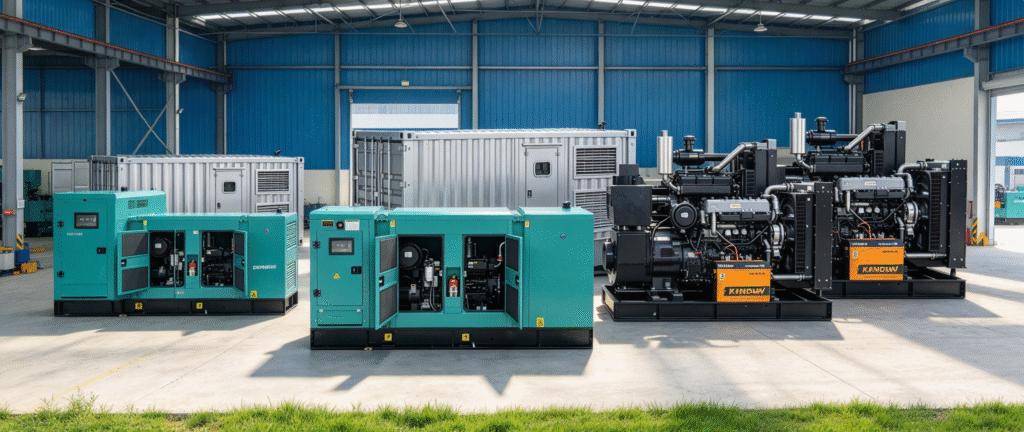
Many factory owners view backup generator sets as “luxuries” that are rarely used—perhaps only a few times a year. When the power grid is functioning reliably, spending money on a large piece of equipment just to let it sit in a corner gathering dust can seem like a poor investment.
Yet, the reality is often this: while it may seem superfluous during normal operations, a single power outage reveals it to be an essential safeguard—a “lifeline.” In industrial production, a power outage is never just a matter of “the lights going out and the machines stopping.”
The hidden costs lurking beneath the surface are far more painful than most people anticipate.
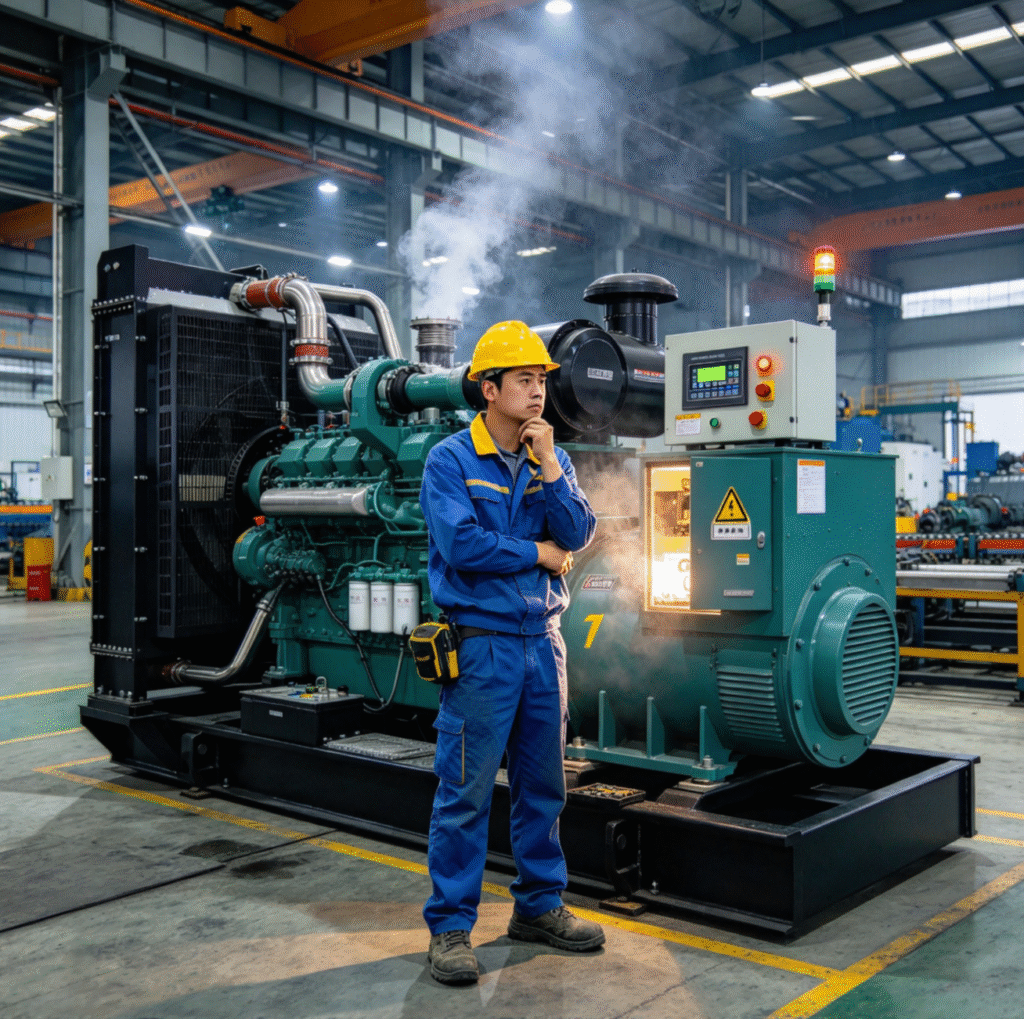
When a power outage occurs, it is easy to calculate the obvious losses—such as the drop in finished-goods output during an hour of downtime. However, it is the “hidden” losses that act as a “black hole,” devouring profits.
For instance, semi-finished products currently in the manufacturing process may be rendered completely unusable, resulting in a total loss of raw material costs. Furthermore, equipment used in processes like injection molding, kiln operations, or chemical production can suffer severe damage to core components—such as main spindles or PLC control systems—during an unplanned shutdown, necessitating expensive major repairs.
Labor costs also mount; workers remain on standby while still drawing full wages, and the company may later incur significant overtime expenses to catch up on orders. Even more problematic is the risk of breaching contracts. For export orders, a delay in delivery can lead to contractual penalties, erode years of hard-won client trust, and even result in the loss of long-term business. In some facilities, power outages also pose safety risks.
The failure of ventilation or cooling systems can trigger accidents, potentially leading to regulatory penalties. Often, a power outage lasting just a few dozen minutes can result in losses that far exceed the cost of purchasing a backup generator set.

Why are power outages so common?
The causes are diverse—ranging from extreme weather and scheduled grid maintenance to unexpected equipment failures or peak-load power rationing—none of which can be predicted with 100% certainty. Because industrial production lines are highly continuous, even the slightest fluctuation in power supply can trigger a chain reaction.
Consequently, for manufacturing enterprises, a backup generator is not merely an optional accessory; it is an insurance policy for production safety. Of course, one should not simply “buy a large machine and dump it on the factory floor” without careful consideration—a mistake many have made to their own detriment. Some business owners, looking to save money, might opt for a low-capacity generator—only to find it lacks the power to run critical equipment when a blackout hits. Others neglect routine maintenance, leading to generator failure at the very moment it’s needed most—a complete waste of investment.
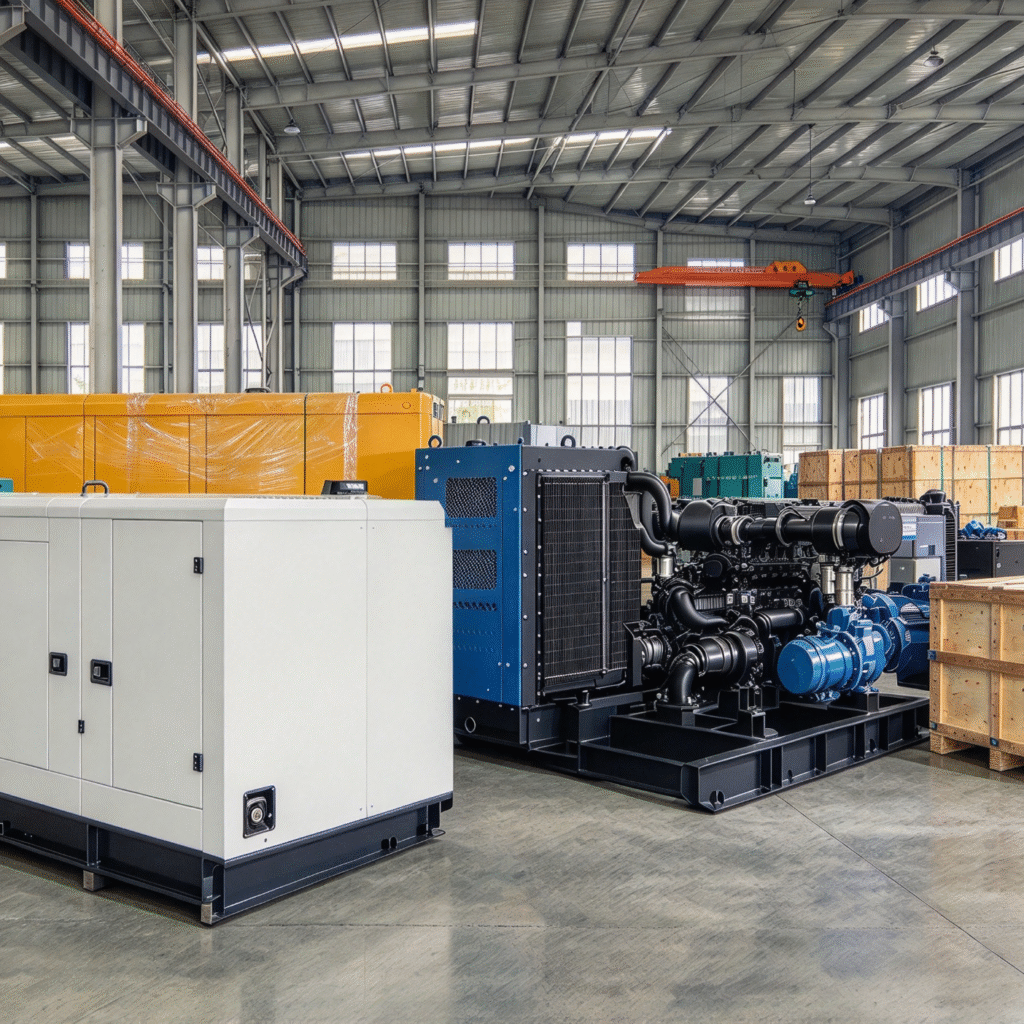
To effectively mitigate the risks of power outages, consider the following practical strategies:
First
Select the right unit based on your actual load requirements. There’s no need to blindly aim for maximum power capacity; instead, identify your core equipment—such as production lines, cooling systems, and control systems—and ensure they are covered. Build in a reasonable margin for redundancy while keeping procurement costs under control. Choose a model suited to your specific operational environment—whether in marine, heavy industry, or chemical processing—by opting for reliable, durable diesel generator sets (such as those from Weichai or Cummins) designed for extended emergency operation.
Second
Incorporate an Automatic Transfer Switch (ATS). In the event of a grid power failure, an ATS allows the generator to start and take over the power supply automatically within seconds. This eliminates the need for manual intervention, minimizes downtime, and protects sensitive equipment and work-in-progress inventory.
Third
Establish a regular maintenance regimen. The greatest risk for a backup generator is simply sitting idle; conduct periodic test runs, replace oil and filters, and check fuel levels to ensure the unit is always ready for action. Many factory generators fail when needed most simply because they have been left neglected for years.
Fourth
Develop a comprehensive emergency response plan for power outages. Conduct simple drills, clarify operational procedures for when the power goes out, and define the correct sequence for shutting down equipment to prevent damage from power surges when electricity is restored.
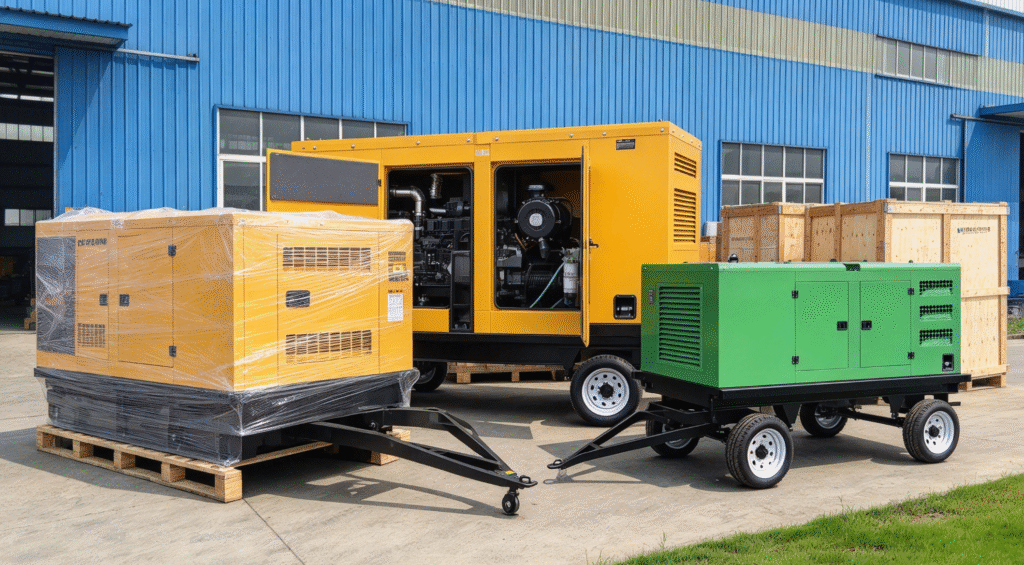
Ultimately, a backup generator serves as a risk-hedging tool for your business. It’s not about hoping for a power outage, but rather ensuring that an unexpected blackout doesn’t wipe out the profits and reputation a company has worked so hard to build.
Rather than scrambling to deal with the fallout after a power failure, it is far better to have a reliable power backup in place—safeguarding your production and your bottom line.